
Week 1
Earth
Pṛthvī
Why Is Earth Last?
Begin with what feels solid. Explore Earth through the senses and the world close at hand.


The Pranasphere · A free five-week series
Pañca Mahābhūtas
Earth, Water, Fire, Air, and Space. Five ways to look more closely at the world—and your place within it.
Explore the elements in Indian philosophy, yoga, and Ayurveda. One thoughtful email each week, with a downloadable guide to keep.
One element at a time
Begin with Earth and make your way to Space. Each week brings a different element into focus through a personal essay, traditional ideas, and a question to carry into your day.
Week 1
Pṛthvī
Begin with what feels solid. Explore Earth through the senses and the world close at hand.

Week 2
Jala
Follow water through its qualities, its associations, and the ways we encounter it.

Week 3
Agni
Explore fire through heat, light, and the attention it asks of us.

Week 4
Vāyu
Consider movement, touch, and the element we notice through what it moves.
Week 5
Ākāśa
End with the most subtle element in the series, and its traditional association with sound.
Prana Literacy
Five elements—or a different understanding of the world?
How do different cultures and traditions understand the elements—and the larger world they describe? These five companion readings explore which elements they name, how they count them, and what an element means within each tradition.
Some Buddhist teachings name four great elements; other presentations include space and consciousness. Chinese wuxing describes five phases. These are different frameworks, with their own purposes and meanings.
Old ideas. Close attention.
Five Around the World readings accompany the series. Open a preview to explore a different perspective without leaving this page.
In Indian traditions, Earth can be one of five great elements. In Chinese wuxing, it is one of five phases within a changing system. The reading also considers Earth as a mother, ancestor, and relationship with the land. These meanings can overlap without being interchangeable.
Further comparisons
Water appears in the Indian five-element framework and among the four great elements described in early Buddhism. It also appears in Chinese wuxing, alongside wood, fire, earth, and metal. Sharing a name does not make its place in each framework identical.
Further comparisons
Ancient Greek accounts name fire among four roots or elements. Chinese wuxing places fire within a system of five phases. Norse creation stories describe an encounter between ice and fire. These offer different ways of understanding the world, rather than one shared elemental system.
Further comparisons
Air or wind appears in Indian, ancient Greek, and Buddhist elemental accounts. Chinese wuxing instead names wood, fire, earth, metal, and water. The comparison invites a closer question: what is each framework trying to describe?
Further comparisons
Space belongs to the Indian five great elements, but it is not counted among the four great elements in early Buddhist presentations. Some Buddhist teachings describe six elements, adding space and consciousness. The number changes because the framework and its purpose matter.
Further comparisons
The five great elements are earth, water, fire, air and space. In Sanskrit they are the pañca mahābhūtas.
No single text or teacher invented the five elements. They developed over many centuries, and several Indian traditions used and interpreted them. Many cultures around the world speak to the elements. This series focuses on the Indian description and mentions a few others along the way.
The Origins guide introduces the wider framework, including the order of appearance, the senses, and traditional associations with doshas and chakras. Details vary between traditions and between editions of the texts.
The Origins guide is included with the series and in The Academy collection.
These companion readings accompany the free email series. You can also find them together with the lessons and downloadable guides in The Academy.
The Academy at Pranayama.com Explore the complete collection — $12A small course of reading
Read each lesson in your inbox, save the guide, or follow a thread into another culture’s understanding of the element.
A dedicated five-part series from The Pranasphere, with one subject unfolding across five weeks.
One element, considered through teaching, observation, and everyday experience.
Five downloadable PDFs, plus an Origins guide introducing the wider framework.
Companion Around the World pages for readers who want to follow the references further.
A closing question in each email. Read, reflect, and reply if you wish.
The Academy at Pranayama.com
The Pranasphere · Prana Literacy
Earth · Water · Fire · Air · Space
Prefer to read at your own pace? Keep the complete series together in The Academy, ready whenever you want to return.
A reference for curious readers, practitioners, and teachers to revisit for study and reflection. Updates to the collection are included and available in The Academy.
Read online · Download the guides · Updates included
Any applicable tax is calculated at checkout.

Dennis Dean
Thirty-six years teaching? That can’t be right. I’m only 30. Wait… 66? When did that happen? Apparently, I’ve been having far too much fun.
My goal has always been to cultivate a healthy sense of humor, which is what my root guru told me I should do. But along the way, I’ve built and provided stewardship for four yoga studios of my own, one after another, and personally taught more than 15,000 students. I’ve also taught around the world as a guest at other studios, at yoga conventions and in workshops, and one-on-one.
This series brings together my teaching, my curiosity about the natural world, and the traditions that inform my work. Read, reflect, and remember, stay light in the heart. oxox
I talk more about myself over here →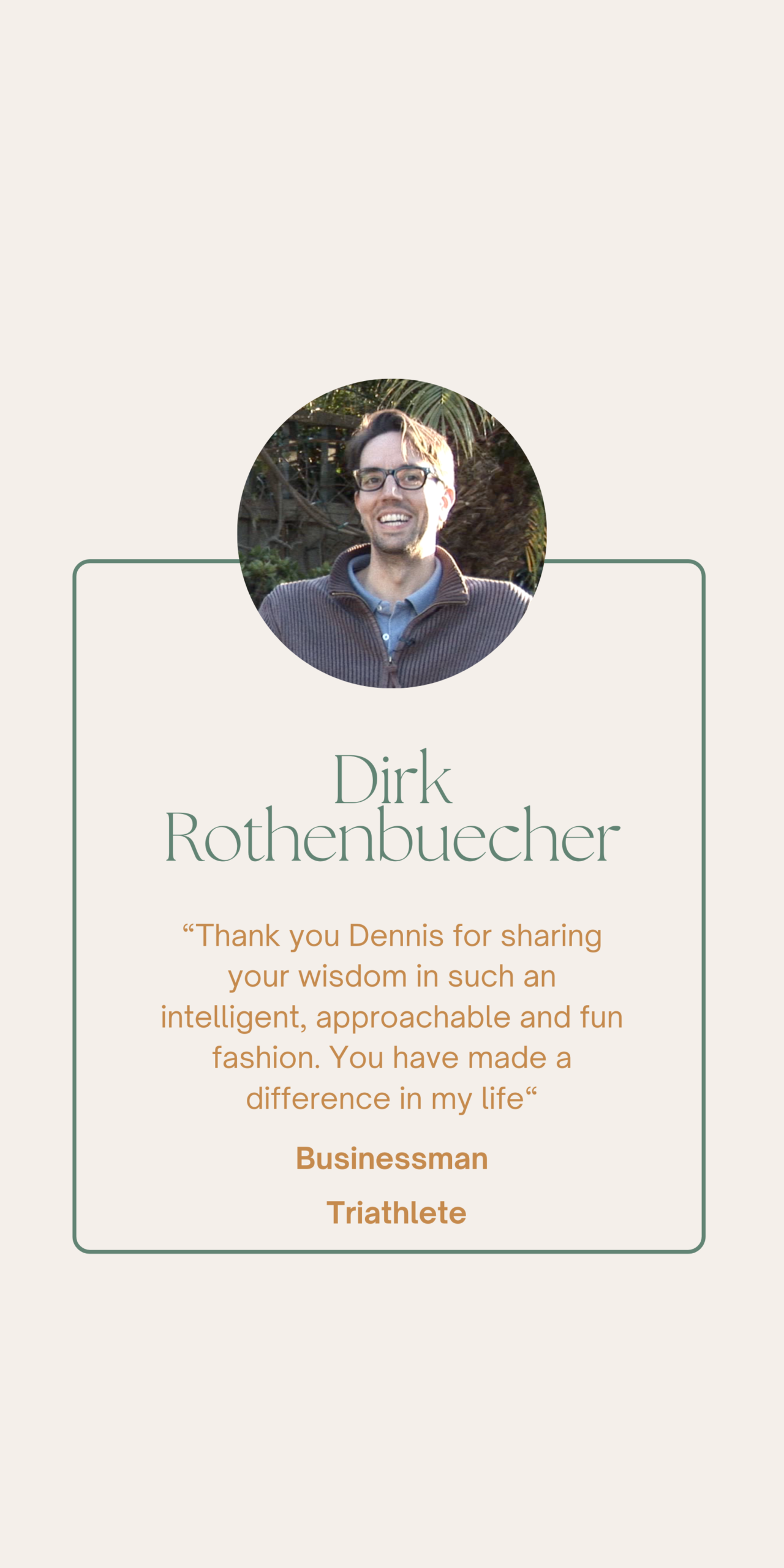
Thank you Dennis for sharing your wisdom in such an intelligent, approachable and fun fashion. You have made a difference in my life.
Dirk Rothenbuecher
Businessman · Triathlete
Studying with Dennis for 25+ years
Five elements. Five weeks.
Join the free five-week email series.
One element each week, with a guide to keep.
We never sell your details or share them with marketers. Unsubscribe anytime.